North African countries celebrate Amazigh New Year 2973
Yennayer is not recognized as an official holiday by Morocco despite the importance of Amazigh people and culture in the region

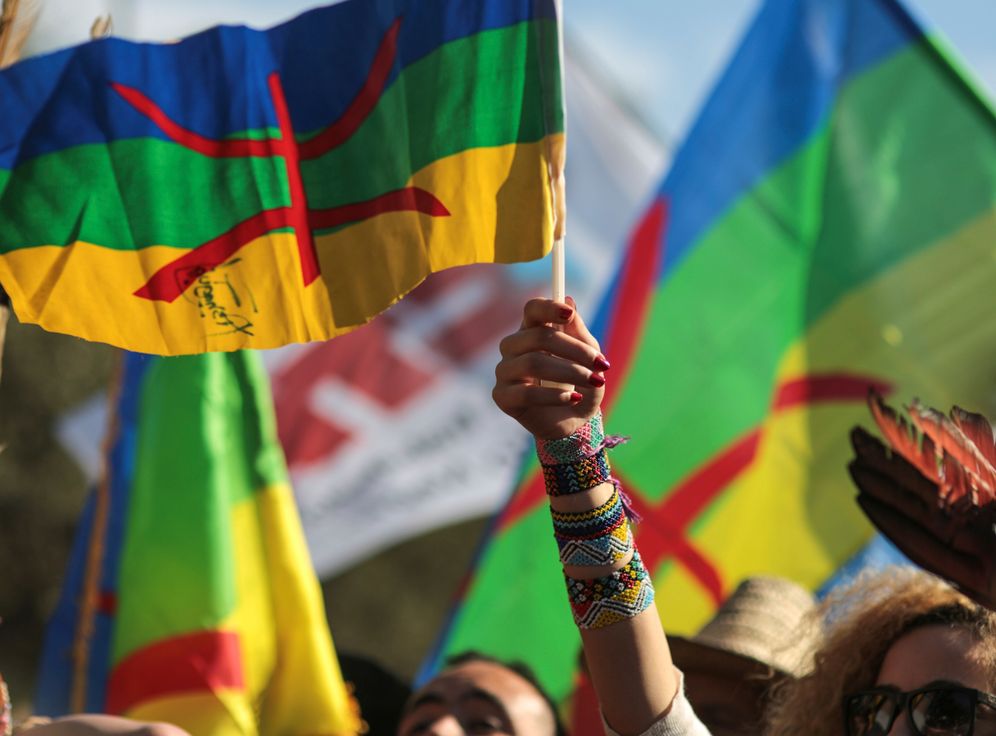
With the phrase “Isqas Amqas” – or “Happy Amazigh year” – Amazigh people in Morocco and across north Africa celebrated Yennayer on Friday.
Amazigh, also known as Berbers, are an ethnic group indigenous to the Maghreb region of North Africa, specifically Morocco, Algeria, Tunisia, and Libya. Yennayer is the first month of the Amazigh Year.
This year will mark the 2973rd year in the Amazigh calendar, and as always was celebrated by the Amazigh people with parades and festive meals.
On the eve of Yennayer, Morocco launched a program to promote the Amazigh language in public administrations. Meanwhile, people celebrated with cultural, scientific, political, and musical activities.
The Amazigh calendar was created in 1980 by Ammar Negadi, a Paris-based Algerian scholar. He chose 943 BC, the year in which the Amazigh Shoshenq I ascended to the throne of Egypt, as the first year of the Amazigh calendar.
Despite the importance of the occasion and the significant role that Amazigh people and culture play in Morocco, Yennayer is not recognized as an official holiday by the country.
The Amazigh movement in Morocco considers that celebrating the arrival of the Amazigh New Year is integral to their heritage, and activists continue to draw attention to their cause and demand more attention from Rabat.
https://x.com/i/web/status/1613814720343216131
This post can't be displayed because social networks cookies have been deactivated. You can activate them by clicking .
This year around, 45 Amazigh civil, human, and women’s rights groups sent a letter to the Moroccan government calling for the demarcation of the Amazigh New Year – which falls on January 13 every year – as a “national holiday and a paid official holiday, similar to the rest of the holidays.”
In Tunisia, until recently, people were forbidden to celebrate Amazigh New Year as authorities were embarrassed by it. Some in the past have gone as far as to question the holiday’s validity, calling it “a French invention.” But in 2011, Berbers publicly celebrated the new year without fear after years of marking the holiday secretly.
In Libya, the Supreme Council of Berbers announced that the holiday would be celebrated in all regions. Celebrations there revolve around coexistence with other cultures and races.
“We are called upon to preserve the rich Berber cultural heritage of our ancestors in all of its forms and to work on its enrichment and promotion,” said Hashemi Assad, Secretary-General of the High Governorate of the Amazigh in Algeria.
He further stressed that the Amazigh culture represents an “essential element in our Algerian identity,” pleading for the preservation of the Berber heritage in order to perpetuate Amazigh customs for future generations. The official also announced plans to open departments in universities that would focus on Amazigh linguistics.