Israeli poet and translator Meir Wieseltier dies at age of 82
His passion for Tel Aviv plays an important role in his writings and is expressed in a love-hate relationship

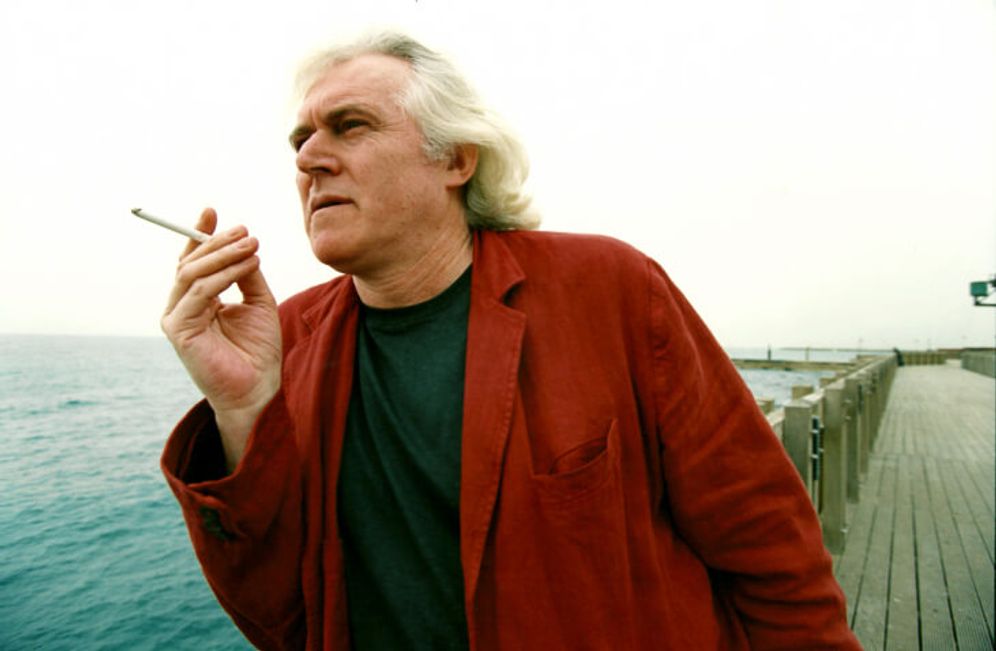
Israeli writer and poet Meir Wieseltier died on Thursday evening at the age of 82, at the Tel Hashomer hospital, near Tel Aviv.
He leaves behind two daughters and three granddaughters. "I realize how important he was to a lot of people," Marta Wieseltier, his daughter, told Ynetnews.
Wieseltier was born in 1941 in Moscow, Russia, and arrived in Israel in 1949 when he was still a child, after spending two years in Poland, Germany, and France. He grew up on a kibbutz and in Netanya, before moving to Tel Aviv at the age of 14. He studied philosophy, history, and English at the Hebrew University of Jerusalem and lived for several years in London and Paris.
In the 1960s, Wieseltier was the central figure of a group of artists known as the "Tel Aviv Poets" and edited several literary magazines. He also co-founded the literary magazine "Siman Kriah," before being, from 1986 to 1989, head of poetry at the publishing house Am Oved.
For several years he taught literature at the University of Haifa, where he is now professor emeritus. Wieseltier translated English, French and Russian poetry into Hebrew, as well as seven Shakespeare tragedies, two plays by Christopher Marlowe, and novels by Virginia Woolf, Charles Dickens, E.M. Forster, Aldous Huxley, Malcolm Lowry, and others.
He has received the Prime Minister's Award three times (1977; 1993; 2011), the Elite Jubilee Prize (1984), the Bialik Prize (1995), the Israel Prize for literature (2000), the L'Olio della Poesia prize (Italy, 2004) and the Neuman Prize (2015). His poems have been published abroad in about twenty languages.
Wieseltier has always adopted a non-conformist literary position. His passion for Tel Aviv plays an important role in his writings and is expressed in a love-hate relationship. He often uses ironic images and a sarcastic and desperate tone to demand a total awareness of the painful realities of life and invites a total emotional and philosophical commitment.
He places himself at the heart of his work, often writing in the first person, and assumes the role of a moralist, looking for values in the midst of chaos. For Wieseltier, poetry is both oppressive ("a thirst for lies") and invigorating: inherently futile, it is nevertheless the "alternative to capitulation and mediocrity".
His works, often of a political nature, criticized the Israeli presence in the West Bank and Israel's wars, while others dealt with city life and love.