Liberman softens draft law stance in bid to break coalition deadlock
Yisrael Beiteinu leader says removing Netanyahu and avoiding another election require ‘painful compromises,’ but rules out a government dependent on Arab parties

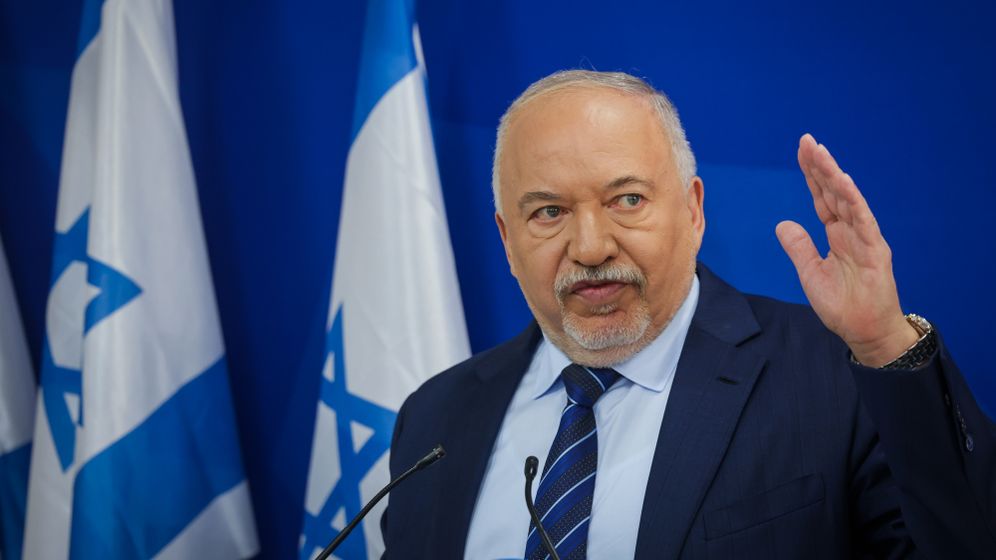
Yisrael Beiteinu leader Avigdor Liberman said Friday he was prepared to compromise on military conscription to help form a government without Benjamin Netanyahu, marking a significant retreat from a central campaign demand as Israel’s post-election coalition negotiations continued.
Liberman set out three red lines: ending Netanyahu’s rule, avoiding another election and rejecting a government whose formation depended on abstentions by the Joint List and Ra’am. Everything else, he said, was open to negotiation.
“On all other issues, flexibility and compromise are permissible and desirable,” he wrote. “That includes the conscription law.”
The statement marked a departure from his pre-election insistence that mandatory military or civilian service for all Israelis was a nonnegotiable condition for joining a coalition. In October, he explicitly ruled out compromise on that demand.
“This pains me, and I know it pains many others,” Liberman wrote Friday. “But given the range of challenges we face today, the national interest of the State of Israel and the people of Israel must come before every other consideration.”
His willingness to soften his position could ease a major obstacle to cooperation with the ultra-Orthodox parties. The October 27 election left Netanyahu’s bloc with 53 seats, the opposition bloc led by Gadi Eisenkot with 48, and the two Arab parties with 19. Bringing Shas and United Torah Judaism into the opposition’s camp would produce a narrow, 61-seat majority.
Channel 12 reported Thursday that Liberman had lifted his veto on partnering with the ultra-Orthodox parties and that his 2018 conscription proposal could serve as a basis for negotiations. His party disputed the report, telling The Jerusalem Post that nothing had changed since his Monday briefing. Friday’s statement explicitly endorsed flexibility on the draft law without announcing an agreement with either party.
Liberman nevertheless reiterated that Yisrael Beiteinu would vote against any government dependent on the Joint List and Ra’am abstaining.
He argued that a minority government would collapse even faster than the previous “change government,” which lasted just over a year, and could bring Netanyahu back with 70 seats. National responsibility, he said, required “difficult decisions” and “painful compromises.”
Liberman called for a coalition of 61 lawmakers without the Arab parties, predicting that three or four Likud lawmakers could join after its formation.
He also denied discussing a rotation agreement for the premiership, saying he had not spoken about it “with anyone, not even myself.” Whoever succeeded in forming a government, he added, should receive full authority for the entire term.